
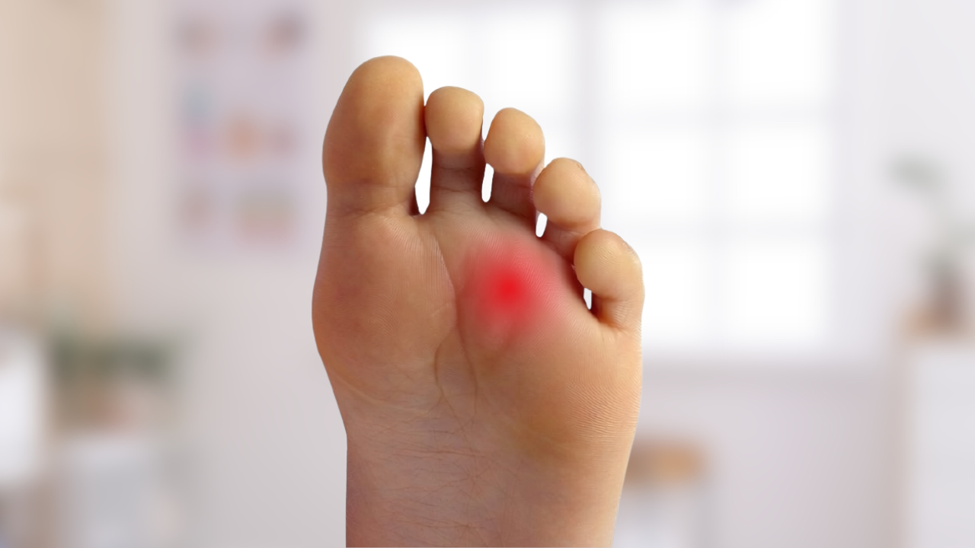
Burning, tingling, or the sensation of walking on a pebble in the ball of the foot can have several possible explanations, and one that Dr. Williams evaluates regularly is a neuroma. Because several other conditions can produce similar symptoms, his approach focuses on a careful evaluation first, so that treatment is directed at the actual source of the pain rather than the most likely guess.
What Is a Neuroma?
A neuroma in the foot, most often called Morton’s neuroma, is a thickened, irritated nerve in the forefoot. Mayo Clinic describes it as a damaged, enlarged nerve that causes pain on the bottom of the forefoot, usually in the area behind the third and fourth toes, with pain that is typically sharp or burning and sometimes accompanied by tingling or numbness that spreads into those toes (Mayo Clinic, 2025).
What Causes a Neuroma?
The exact cause is not known, but according to Mayo Clinic it is likely related to pressure on the nerve, and high-heeled or narrow shoes may worsen the symptoms (Mayo Clinic, 2025). The same source notes that people with bunions, hammertoes, high arches, or flat feet are at higher risk, which is one reason Dr. Williams evaluates the structure of the whole foot rather than only the painful area.
Symptoms That May Suggest a Neuroma
- Burning or sharp pain in the ball of the foot, often between the third and fourth toes
- A sensation of standing on a pebble or a fold in the sock
- Tingling or numbness in the toes
- Symptoms that tend to worsen in narrow shoes or with prolonged standing or walking
- Relief, at least temporarily, when the shoe is removed and the foot is massaged
Distinguishing a Neuroma from Look-Alike Conditions
Pain in the ball of the foot is not always caused by a neuroma. Stress fractures, inflammation of the joints at the base of the toes, arthritis, and other nerve conditions may produce overlapping symptoms, and each is managed differently. For that reason, evaluation typically includes a review of history and activity, a hands-on examination of the forefoot, and imaging when it may help to clarify the diagnosis or rule out other causes.
Treatment Options
Treatment depends on the severity of symptoms and how long they have been present, and it often begins with conservative measures:
- Footwear changes: According to Mayo Clinic, many people get relief by wearing shoes with low heels and wide toe boxes and by using shoe inserts (Mayo Clinic, 2025).
- Padding and orthotics: Devices may be recommended to reduce pressure on the affected nerve.
- Activity modification: Temporarily reducing high-impact activity may help symptoms settle.
- Injections or surgery: Mayo Clinic notes that treatment may also include corticosteroid injections or surgery when conservative measures are not sufficient (Mayo Clinic, 2025).
When to Schedule an Evaluation
If forefoot pain, burning, or numbness has persisted despite a change in footwear, or if it is interfering with walking, work, or exercise, an evaluation may be appropriate. Earlier assessment often broadens the range of treatment options available.
With 22+ years of experience and having trained more than 300 surgical residents, Dr. Williams brings a thorough, measured approach to forefoot pain, with the goal of clear answers rather than guesswork. Foot & Ankle Specialists is here for West Jordan and beyond. Schedule a visit to have your symptoms properly evaluated.